Why Global Automakers Are Expanding Their Leadership Teams in Saudi Arabia

Saudi Arabia: Major global automotive manufacturers are not only focused on opening dealerships in Saudi Arabia anymore. They are relocating senior executives, establishing regional headquarters, and getting country directors that have direct access to CEOs for quick decision-making. There are visible signs of this change, as US EV giant Tesla opened its first showroom in Riyadh in early 2025 with a dedicated Saudi leadership team. Likewise, Lucid Motors established a manufacturing factory employing 3,000 workers. Korean automaker Hyundai is another example, which has earmarked $500 million worth of financial commitment to local assembly, bringing Korean executives permanently to KSA.
KEY TAKEAWAYS
Why are automakers hiring senior executives in Saudi Arabia?
Vision 2030 targets require local manufacturing, 40% localisation, and 400,000 annual vehicle production.What leadership roles are being created?
Country directors, manufacturing VPs, supply chain heads, training directors, and government relations executives.When global manufacturers move leadership teams to a market rather than managing it remotely, it clearly underlines the long-term commitment. This is now happening a lot lately in Saudi Arabia and hence raises the question as to why foreign brands are investing so heavily in local leadership infrastructure now.
Leadership Expansion by Major Automakers (2023-2025)
|
Brand |
Investment |
Local Leaders |
Key Roles |
Main Focus |
|
$3.4B+ |
50 |
Manufacturing VP, Supply Chain Director |
EV production: 155k/year |
|
|
$500M |
30 |
Assembly Ops Director, Sourcing Manager |
50k/year mixed output |
|
|
Undisclosed |
20 |
Country Director, Service Ops Head |
Sales & charging network |
|
|
GM/Chevrolet |
Expansion |
15 |
Regional President, EV Portfolio Director |
EV range expansion |
|
Ceer Motors |
$150M+ |
60 |
CEO, Engineering Director |
Saudi EV brand |
|
Partnership |
12 |
Gov't Relations Head, Training Lead |
Local assembly study |
The Vision 2030 Key Enabler
One major factor that has played a role in making the Saudi Arabian automotive industry more aggressive and robust is government Vision 2030. As part of this ambitious goal, the Kingdom’s National Industrial Strategy aims to bring 3-4 manufacturers to the country that together manufacture nearly 400,000 vehicles annually by 2030. That government policy is not only a mere document, but it is backed by a massive $2 billion in direct investment. To achieve that, a big number of local manufacturers undoubtedly need domestic manufacturing, local supply chains, and trained Saudi workforces.
Global manufacturers all over the world have learned from China's experience. When China looked at expansion and demanded local production, companies that moved leadership teams locally succeeded more than those who tried to manage their operation remotely.
Saudi Arabia objectively wants 40% local gross value addition by 2030, with components manufactured locally, not just assembled. That requires supply chain executives who understand Saudi industrial capabilities and manufacturing leaders who can train Saudi technicians. It is hard to achieve that with quarterly visits; rather, you need senior executives that are based locally in Riyadh, building relationships with Ministry of Industry officials and solving problems daily. That is not possible to do from overseas locations. This also emboldens the local employees, who can become more protective and productive with quick access to senior leadership, not waiting for days for a reply on key decisions.
Manufacturing Drives Executive Hiring
Lucid's King Abdullah Economic City factory has set a huge goal of touching 155,000 vehicles in annual production. That requires manufacturing VPs, quality control directors, supply chain executives, training directors, and government relations teams. And to achieve that, the brand has already brought over 50 executives to Saudi Arabia, relocating them here.
Hyundai is not different in this regard, as the Korean automaker looking to spend $500 million on a plant producing EVs and internal combustion vehicles also requires local leadership stationed at the site. Assembly directors, sourcing managers, and workforce heads would never be able to commute from Seoul.
Ceer Motors, the first domestic brand in Saudi Arabia, also knew the importance of key personnel in its goal to start local manufacturing. The brand has hired over 60 executives, as the company needs permanent senior leaders to build a new Saudi automotive industry.
Core Talent Development
Vision 2030 wants to train Saudi workers right here, which creates several new executive leadership roles in the country. Such as
Training Directors: An experienced senior leader who can oversee partnerships with the Technical and Vocational Training Corporation to enable EV maintenance courses and manufacturing programmes that can be taught to youngsters.
Local Managers: To ensure that at key manager positions, there are Saudi locals available to fill the increasing percentages of roles. This is also essential for maintaining efficiency with specialised HR skills.
Leader for Supply Chain Localisation: A senior executive who is experienced enough to search and find Saudi suppliers which have enough expertise and capabilities that can produce components, then help them develop their capabilities.
Government Relations Executives: One key aspect for most companies is managing relationships with the Ministry of Industry and local authorities. This is vital for compliance while accessing support programmes.
All of these are highly essential roles, and those can be performed right at the locations. It is not entirely possible to manage these functions remotely, as they mostly need daily interaction with government entities, educational institutions, and local businesses.
More than Manufacturing
While manufacturing is one big operation for any automobile brand, it is not the only one. For example, Tesla's expansion clearly highlights that efforts towards leadership investment and expansion go way beyond manufacturing. Tesla opened showrooms without local production, and yet it has hired several locals for positions like country directors, service heads, charging managers, store managers and others.
And the reasons are pretty straightforward. Retailing EVs in Saudi Arabia is a lot different than selling them in Europe, the UAE, or even China. KSA is a different market both in terms of culture and geographical aspects. The biggest factor is the climate, which challenges battery performance, which needs to be explained to buyers. Also, infrastructure needs government partnerships. Service networks must be built from scratch that cater to the needs of buyers. All of these key functions require local leadership to make daily decisions and to be effectively implemented by local employees.
Another major American brand, General Motors, plans to bring in 13 all-new EVs for the region. This is a big number, and to sell them locally requires regional presidents, marketing directors, and service directors building networks across the Kingdom. These roles filled by locals are far more effective than those of nationals overseas.
The Competitive Pressure
The market is also defined by Chinese manufacturers, who are taking a completely different approach to Taking Over the Saudi Arabian car market and winning it. This is forcing more established global brands to stay ahead of the competition, and here comes another compelling factor to invest rather aggressively in local talent. Top Chinese brands, including BYD, Geely, and Changan, have entered the market with a bang, partnering with local distributors and trained staff to handle their sales and service. Today, the Chinese brands combined have a market share of approximately 13%, which is significant, and they are working overtime to prove to buyers that they can trust and consider them as superior alternatives based on after-sales and service support.
Many Chinese competitors have country directors and training managers on the ground; this makes Toyota, Hyundai, Kia, Ford and others do everything to have their own local leaders across functions.
What It Means for Buyers
Expanded manufacturer leadership teams mean:
Superior Service: This is absolutely necessary, as local executives handle service improvements and warranty exceptions faster and smoothly without escaping them to distant offices.
Quicker Availability of Spares and Parts: Local supply chain executives easily focus on Saudi inventory; this reduces availability and also considerably lowers repair wait times.
More training: Technical directors make sure service centres have enough skilled technicians familiar with EV and hybrid technologies.
Improved warranty: Local teams process claims faster and authorise goodwill repairs; this directly reflects on the quality of service and customer satisfaction.
Greater availability: Country directors advocate for models suited to Saudi preferences, interact with customers, and get real-time feedback, all of which help a great deal in strategy.
These are significant improvements, and they make a difference between buying from a manufacturer with local commitment as opposed to one treating Saudi Arabia as a secondary export market.
Conclusion
Global automakers are expanding leadership teams in Saudi Arabia because Vision 2030's manufacturing targets require it, Chinese competitor pressure demands it, and operational complexity makes remote management ineffective. Tesla, Lucid, Hyundai, GM, and others are creating dozens of senior executive positions that didn't exist three years ago and contribute to the Saudi Arabia EV Growth Story. And if the future is any indication, this will continue to stay elevated with more and more local leadership roles as brands rely on them more. For buyers, this leadership investment means better service, faster parts availability, and manufacturers genuinely committed to the Saudi market.
Dinesh Goluguri

With over 15 years of experience in the automotive world, Dinesh Goluguri bringing hands-on experience and deep market knowledge. Passionate about SUVs, sports cars and luxury vehicles, he combines enthusiasm with expertise in delivering insights that resonate with car buyers and enthusiasts alike. With a special interest in car modifications and upgrades, Dinesh offers a unique perspective that goes beyond standard reviews, highlighting both factory features and customization potential. His work helps readers navigate new launches, features and trends in the dynamic automotive market.
Read Full Bio-
Nissan X-Trail -
Nissan Patrol -
Nissan Altima -
Nissan Magnite -
Nissan Kicks -
Nissan Patrol Nismo -
Nissan Tekton -
Nissan N7 -
Nissan Frontier Pro -

Nissan Juke EV -
Nissan Micra EV -
Nissan Leaf
- News

- Latest
- Upcoming
- Popular
-
 Nissan Frontier ProPrice coming soon
 -
 Nissan Juke EVPrice coming soon
 -
 Nissan LeafPrice coming soon
 -
 Nissan Micra EVPrice coming soon
 -
 Nissan TektonPrice coming soon
 -
 Nissan N7Price coming soon

-
 Nissan X-TrailSAR 104,999 - 156,999
 -
 Nissan PatrolSAR 261,000 - 422,999
 -
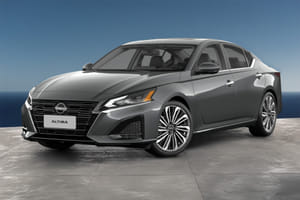 Nissan AltimaSAR 112,700 - 141,500
 -
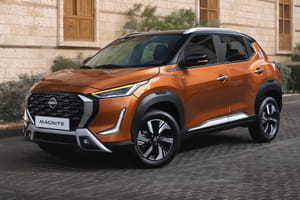 Nissan MagniteSAR 69,999 - 80,999
 -
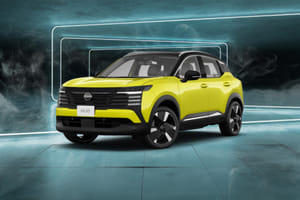 Nissan KicksSAR 89,599 - 111,399
 -
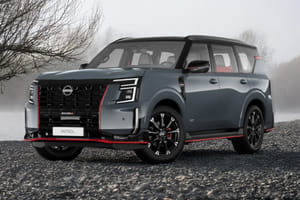 Nissan Patrol NismoSAR 450,999

-
 Nissan X-Trail29 Apr, 2026 .
 -
 patrol NISMO 2022Crafted To Conquer29 Apr, 2026 .
 -
 Nissan Pathfinder29 Apr, 2026 .
 -
 The new Nissan Altima | Challenging the norm29 Apr, 2026 .
 -
 Nissan Patrol PRO-4X Ride & Drive29 Apr, 2026 .
 -
 New Nissan Z 2023 - Middle East Premiere29 Apr, 2026 .
 -
 All-New Nissan Magnite - 202529 Apr, 2026 .
 -
 The all-new Nissan KICKS | Challenging the norm29 Apr, 2026 .
 -
 Nissan X-Terra - Specifications and Features29 Apr, 2026 .