How to Buy a Used Car Safely in Saudi Arabia: Checklist & Red Flags

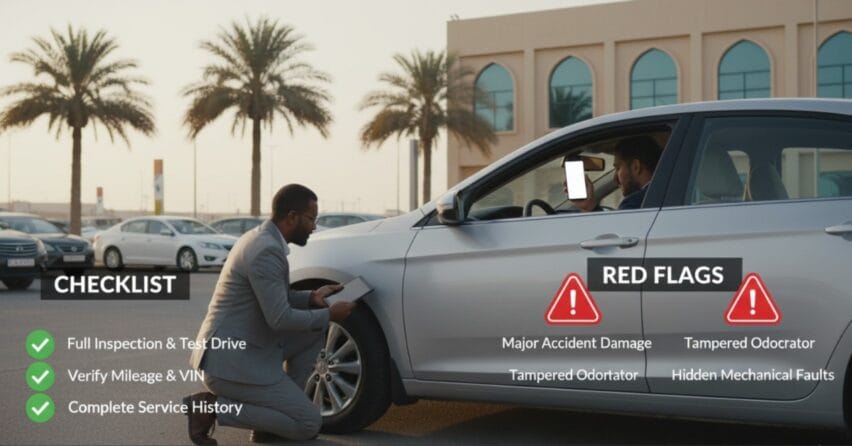
Saudi Arabia: Buying used cars is popular in Saudi Arabia, as they are affordable due to high new car prices. The majority of expatriates and young buyers focus on greater value and always prefer a decent used car instead of spending money on a new one. Also, the penetration of online platforms has helped organize the market, boosting transparency and access and attracting more buyers. As a result, the used car market in KSA is booming thanks to growing buyer interest across the board. A used car protects buyers from the steep depreciation faced by new cars. Right now, SUVs are the fastest-growing segment; however, sedans still hold a large percentage of the used car market.
KEY TAKEAWAYS
What makes a used car a good buy in Saudi Arabia in 2025?
Reliability, low maintenance, high resale value, and avoiding steep depreciation on a new car make a used car a great bargain.What are the top 3 red flags of a used car that buyers should never ignore?
Tampered odometer, accident history, and unsealed engine are the top red flags that indicate a used car should be avoided.The high growth also implies greater risks, and buying a used car requires careful assessment to get an authentic deal. Buyers often encounter fraud like odometer rollback, hidden accident histories, unreliable maintenance records, etc.; hence, buying a used car safely means following a systematic approach. Here is our guide that should help you with all the key information when going through the buying process.
Document Verification
- If you happen to like a car that appears to be just fine, the first step in the buying process starts with the paperwork. This is a basic requirement and your first line of defense against fraud.
- To access authentic data, refer to Mojaz, a government service that pulls data from traffic departments, insurance companies, and inspection centers. Through this, you can get accident history, previous owners, odometer readings from Mojaz sources including Fahas, and repair records. The report costs around SAR 60-80 but provides you all the key vehicle information.
- How to do that? Visit Mojaz's website or download the mobile app. Enter the chassis number or serial number from the Istimarah. Pay through SADAD, and that's it. Once the payment is successful, the report arrives instantly.
- Look for these warning signs in the Mojaz report, like odometer readings that decrease between inspections.
- Multiple accidents within short timeframes. One minor accident is fine, but three accidents in six months indicate reckless driving habits.
- Frequent ownership changes are another issue you need to avoid. A car with four owners in three years usually has problems that previous buyers wanted to escape.
- If a car has long gaps without insurance, it usually means it wasn’t used for a long time, and this can lead to mechanical issues.
- Also, review the Istimarah closely and confirm that the name on it matches the seller’s ID. Verify the chassis number with the one on the car. Check the color listed; if the Istimarah says white but the car is black, someone did bodywork without updating the records.
- The Fahas certificate must be current. New private cars need inspection three years after registration, then annually. You need to check the expiry date in Absher under the Vehicles tab. An expired Fahas usually means the seller skipped the inspection, often because the car might not pass. Then ask the seller to get new Fahas by following Understanding Fahas in KSA – What Causes Inspection Failures & How to Pass.
The Mojaz Reality Check
|
Key Aspects |
Implications |
Red Flag |
|
|
Accident History |
The number and severity |
Multiple accidents, especially with airbag deployment |
|
|
Odometer Record |
Mileage at each inspection |
Lower numbers between Fahas dates |
|
|
Ownership Chain |
Number of ownership |
Anything more than 4 in less than 3 years |
|
|
Insurance Timeline |
Gaps in coverage |
If more than 6 months |
|
|
Repair Records |
Any major work took place |
Unseal engine or transmission rebuilds |
Fundamentals of Physical Inspection
Start with the VIN plate on the dashboard or driver's door frame, and compare it exactly with the Istimarah; if anything mismatches, end the inspection immediately.
Paint and Body: Check paint consistency in sunlight. Does the hood match the fenders? Do doors match quarter panels? Color mismatches indicate bodywork. Run your hand along the body seams, and any rough edges or thick paint buildup confirm repairs.
Paint thickness gauges costing SAR 150-300 on Noon or Amazon Saudi remove guesswork. The factory paint generally ranges from 100 to 140 microns. Anything above 200 microns usually indicates repainting.
Open all doors, the hood, and the trunk. Look for overspray on rubber seals, hinges, or plastic trim. Paint where it shouldn't be confirms accident repairs. Check panel gaps; factory assembly produces consistent spacing. Uneven gaps indicate poor repairs or frame damage.
Tire rust and wear: You need to check under the wheel wells, along door bottoms, and below the car. Surface rust is manageable; rust holes or structural rust are not. Also, inspect the tire wear. All tires should wear evenly; more wear on inner edges indicates alignment issues. Mismatched tire brands mean corner-cutting maintenance.
Engine Bay Inspection
Always look for fluid leaks. Oil around the engine clearly indicates gasket issues. Green coolant puddles point towards the radiator or hose leaks. Red fluid means transmission leaks.
Check fluid conditions like engine oil, which should be amber or light brown; black oil that smells burnt suggests neglected maintenance. Coolant should be bright and clean. Brake fluid should be clear or light yellow. Pull the oil dipstick, wipe it, reinsert it, and check the level. Low oil means leaks or oil consumption.
Interior Wear Patterns
Wear patterns reveal truth. A car’s odometer says 80,000 km, but completely worn brake pedal rubber means fraudulent mileage. If you come across cracked or faded steering wheel leather, it directly highlights greater sun and miles than shown to you. Because a real 80,000 km car clearly shows minimal seat bolster wear, visible pedal grooves, intact steering wheel leather, and minimal door handle scratches. Heavy wear with low mileage points towards possible odometer tampering. Check behind the gauge cluster for fingerprints, scratches, or tool marks, which indicate someone accessed the odometer.
Test every feature. The AC should blow cold within 30 seconds at maximum. Check seat adjustments; electric seats should move smoothly. Test the infotainment system and backup camera. Pull back floor mats completely. Damp carpets or water stains mean leaks. Smell for mold or mildew.
Test Drive Checks
Test driving a car is a must in the buying process, and any suggestion otherwise must not be tolerated. The test driver allows checking the engine sound for grinding, knocking, or rattling from the engine bay to know if there is any internal damage.
Once started, watch the dashboard; all warning lights should illuminate briefly then disappear. If the check engine, ABS, or airbag lights stay on, unresolved problems exist.
Driving Tests: Check the brakes to see they operate smoothly. Pulsing through the pedal indicates warped rotors. Check transmission, steering, etc. Take the car over speed bumps, and the suspension should absorb impacts without excessive bouncing or metallic clanking.
Professional Inspection Centers: Once you’re done with the inspection, take the car to professionals. This costs SAR 300-500 but can save thousands. Things like computer diagnostic centers connect tools to the car's ECU, revealing stored error codes, emission levels, and sensor data. Many codes won't trigger dashboard lights but indicate underlying problems. Diagnostics often also reveal mileage stored in various modules, and most of the current cars record mileage in the engine ECU, transmission module, ABS controller, and airbag system. Any potential mismatched numbers prove odometer rollback; it is not hard to track this down.
Absolute Deal-Breakers
Don’t go ahead if you find any of the following issues:
- If the seller doesn’t give access to Mojaz
- If the VIN does not match with documents
- During physical inspection, if fresh undercoating or paint hides damage
- If you find the seller is rushing by asking for immediate cash payment
- There is no service history in the last 2-3 years.
- Multiple accidents in the Mojaz report
- The odometer shows higher mileage in the diagnostics test.
- If there are ownership gaps visible and the owner is unable to explain
These red flags indicate fraud, hidden damage, or serious problems. No deal is worth the risk.
Critical Warnings About Common Scams
|
Scam Type |
How It Works |
Protection |
|
Odometer Rollback |
Seller programs lower mileage into the digital odometer |
Check Fahas' history in Mojaz, inspect wear patterns, and run computer diagnostics |
|
Hidden Flood Damage |
The car was cleaned after flooding, rust, and electrical issues appeared months later |
Check for mud in unusual places, test all electrical systems, and smell for mildew |
|
Cloned Cars |
A stolen vehicle gets VIN plates from a legal car |
Verify VIN matches across plate, windshield, doorjamb, and engine bay |
|
Gray Import Issues |
Non-GCC spec cars lack proper documentation |
Verify Customs card, check with SASO, confirm GCC specifications |
|
Accident Cover-Up |
Major damage repaired cosmetically without structural fixes |
Get the Mojaz report, use the paint gauge, and test drive for alignment issues |
|
Fake Service Records |
Forged maintenance stamps |
Call the dealer service department to verify records |
|
Curbstoning |
The dealer poses as a private seller |
Multiple ads for different cars, meeting locations, and pressure tactics |
Transfer Documentation
This is the final and one of the most important steps. You need to visit the traffic department or use Absher, and make sure you have all the required documents: the original Istimarah, both parties’ Saudi ID/Iqama, valid insurance, a valid Fahas certificate, and the sale agreement. The transfer fee typically runs SAR 150, and update insurance immediately, and register the car in Absher.
Conclusion
Overall, buying a used car is a good choice in Saudi Arabia if you get a good deal. A used car saves you a huge upfront cost, as well as saves on depreciation and other major costs considerably. That is why demand for good cars in the used market is high. However, buying a used car safely requires diligence, not luck.
If you follow all the right steps, don’t skip anything important, and pay close attention to all the red flags, there is no chance you could land in a bad deal. That means it's not only a financially good decision but also a reliable car you can depend on for the future, and you don’t have to stress about it. So go ahead and find your next used car that suits your budget and needs.
Here is everything about the Car Financing in KSA Explained – Loan Types, Rates & Easiest Ways to Get Approval.
Dinesh Goluguri

With over 15 years of experience in the automotive world, Dinesh Goluguri bringing hands-on experience and deep market knowledge. Passionate about SUVs, sports cars and luxury vehicles, he combines enthusiasm with expertise in delivering insights that resonate with car buyers and enthusiasts alike. With a special interest in car modifications and upgrades, Dinesh offers a unique perspective that goes beyond standard reviews, highlighting both factory features and customization potential. His work helps readers navigate new launches, features and trends in the dynamic automotive market.
Read Full Bio-
Toyota Raize -
Toyota Fortuner -
Toyota Yaris -
Toyota Land Cruiser 70 Hard Top -
Toyota RAV4 2026 -
Toyota Urban Cruiser -
Toyota Camry -
Toyota Corolla -
Toyota Supra -
Toyota Land Cruiser Prado -
Toyota Land Cruiser 70 Pickup -
Toyota Land Cruiser HEV MAX
- News


- Latest
- Popular
-
 Toyota CenturyPrice coming soon
 -
 Toyota TundraPrice coming soon
 -
 Toyota SequoiaPrice coming soon
 -
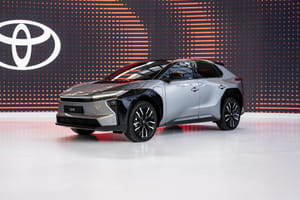 Toyota bZ4XPrice coming soon
 -
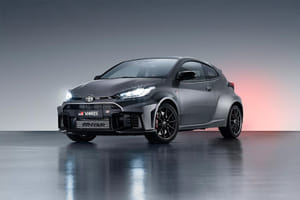 Toyota GR YarisPrice coming soon
 -
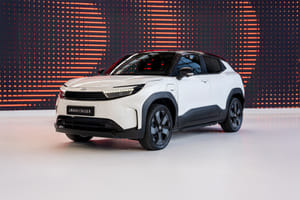 Toyota Urban Cruiser 2026Price coming soon
-
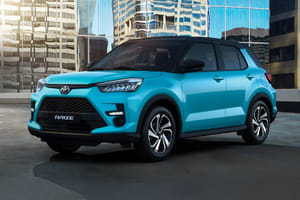 Toyota RaizeSAR 68,827 - 75,497
 -
 Toyota FortunerSAR 128,742 - 187,047
 -
 Toyota YarisSAR 66,700 - 78,832
 -
 Toyota Land Cruiser 70 Hard TopSAR 158,240 - 201,192
 -
 Toyota RAV4 2026SAR 106,662 - 165,542
 -
 Toyota Urban CruiserSAR 82,915 - 92,115

-
 Designed for the City06 May, 2026 .
 -
 Toyota Yaris06 May, 2026 .
 -
 It shines with a completely new style06 May, 2026 .
 -
 Toyota Crown06 May, 2026 .
 -
 the most amazing of its generation06 May, 2026 .
 -
 Toyota Corolla Cross06 May, 2026 .
 -
 Toyota Rav406 May, 2026 .
 -
 2026 Toyota Supra Track Edition06 May, 2026 .