How to Protect Your Car From Saudi Heat & Sandstorms (2025 Updated Guide)

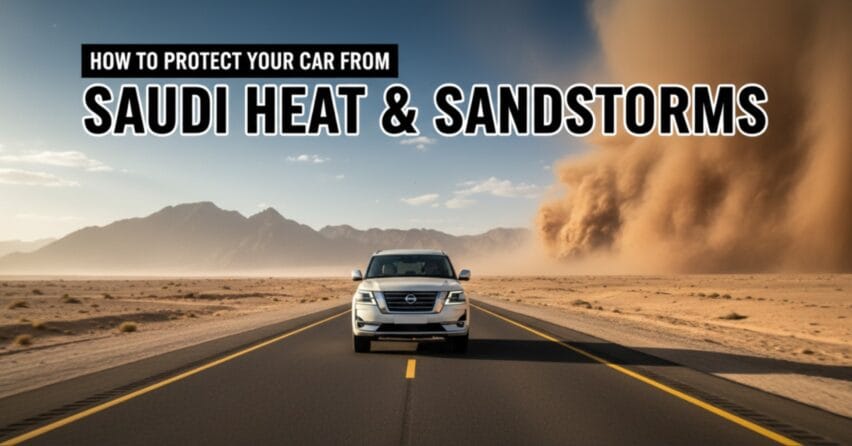
Saudi Arabia: Every car owner is well aware of the extreme weather conditions of Saudi Arabia. The climate is truly unforgiving. Temperatures above 50°C are not unusual, and sandstorms are so common that they appear suddenly without warning. This is further exacerbated by intense UV radiation that has the potential to bleach paint and crack interiors of cars. These brutal environmental conditions are the everyday reality of Saudi car owners, posing a greater challenge of car damage than any other market. In the world. However, there is a way out of this challenge if you approach it properly.
KEY TAKEAWAYS
What makes Saudi Arabia's weather conditions challenging for cars?
Extreme heat (above 50°C), sandstorms, flash floods, and strong winds erode components and reduce visibility.What are the common high-expense damages owners face in Saudi Arabia in 2025?
AC failures, radiator damage, battery evaporation, tire cracks, and fuel pump replacements cost thousands.It is often observed that most car owners don’t take the necessary steps to protect their cars until it is too late. If you wait until the breaking points, the cost is enormous, and the huge inconvenience is not even considered. There are certain key steps that, if taken at the right time with enough attention, can save your car and ensure its longevity by being consistent with maintenance and adopting smart protective measures. Here is Everything about Car Maintenance for Saudi Drivers – What to Check After Every Desert Trip.
Our updated 2025 guide covers everything Saudi drivers need to know about protecting their vehicles from heat and sandstorms, which is something unavoidable.
There are two primary threats to cars: first, understanding them is critical to ensure the right steps.
Extreme Heat Impact
The first basic step is to know the key threats from the extreme head impact. The engine overheating is the primary concern, and the cooling systems work 50% harder in 50°C temperatures. The tyre pressure increases dangerously, which can overheat and potentially blow out. Likewise, the battery lifespan reduces by 50% in desert heat, and the engine oil thins, reducing its protection. Also, plastic components become brittle, and often leather seats crack and fade.
Sandstorm Damage
Primarily, sand particles penetrate almost everything; most of the time, they bypass filters and damage engine internals. The suspension components accumulate sand, causing squeaking and premature wear. Similarly, paint becomes abraded by flying particles, interior dust causes respiratory issues, and visibility goes down significantly to near-zero in minutes, creating accident risks.
Heat Protection
Parking Solutions
The most obvious thing to do to achieve heat protection is to find shade, covered parking, garages, carports, or a shade structure. All of this keeps interior temperatures below 20°C from direct sun exposure, which provides a big relief from the heat. But if covered parking is unavailable for whatever reason, it is necessary to use sunshades. The magnetic sunshades are inexpensive, costing between SAR 150-400, and can be installed without drilling, which certainly helps cabin temperature by 10-15°C. You can also consider using windshield sunshades; they are great for avoiding solar heat entering the cabin. Choose the reflective types that work better than dark ones at deflecting heat.
Window Tinting
Another step to get relief from heat, but it is vital that you don't use cheap window tint. The ceramic tinting with 85%+ heat rejection makes a real difference; the cost is about SAR 300 to SAR 800, depending on the vehicle size and quality of tint. This may sound pricey for many owners, but it protects your health (UV damage), reduces AC strain, and prevents upholstery from cracking.
Interior Protection
Apart from the exterior and overall cabin heat, it is also critical to take care of the interior. Seat covers protect leather from UV damage, and it is better to use breathable, heat-resistant materials designed for hot climates. Also, steering wheel covers prevent burns and material degradation. You can also consider dashboard covers that reduce heat absorption and protect the underlying plastic from cracking. This is quite necessary because, just in case cracks develop in the dashboards, it would cost you a lot to replace them, and not just that, but they also don’t look good.
Cooling System Maintenance
This is critical; you must check coolant levels monthly. Use a 60:40 water-to-coolant ratio specifically formulated for high temperatures and compliant with GCC standards. Standard coolant may fail in extreme heat. Radiator cleaning removes sand and dust blockages. Always have a professional flush the radiator at least annually, more often if you drive through desert routes frequently, and get the thermostat checked. A stuck thermostat causes consistent overheating.
Battery Care
The battery is another important part of the car, and looking after it is a must. The acid evaporates quickly in extreme heat, so check battery terminals monthly for corrosion. If necessary, clean with a wire brush if corroded and apply protective coating (available at any auto parts store).
Test battery health annually. It is often found that in Saudi heat, batteries typically last 2-3 years instead of 4-5 years. To avoid any inconvenience, it is better to plan the replacement accordingly. Always keep a heat-resistant jump starter in your vehicle. Breakdowns happen; it is always in your interest to be prepared.
Tyre Management
Tyres are one big element of any car; well-inflated tyres not only help in safety but also improve mileage significantly. To protect them from the heat, you need to check the pressure when the tires are cool, preferably in the morning or after several hours of inactivity. Pressure readings taken immediately after driving are inaccurate because heat expands air.
There is a likely chance of underinflated tyres overheating and blowing out. Likewise, overinflated tyres provide poor traction; always target the manufacturer's recommended PSI exactly. It is recommended to rotate tires every 8,000 km. Heat accelerates uneven wear patterns. Use all-terrain or desert-specific tires for sand driving. They handle extreme conditions better than street tires.
Engine Oil Strategy
Use synthetic oil rated for high temperatures, as it handles heat better than conventional oils. Change oil at 80% of recommended intervals in the summer months. If your oil change is due at 10,000 km, change it at 8,000 km when temperatures are extreme. It is a good strategy to keep extra quarts of engine oil in your vehicle. Top-up between services prevents damage from low oil levels.
|
Heat Protection Method |
Cost (SAR) |
Effectiveness |
Installation Time |
Maintenance |
|
Covered parking/garage |
0 (if available) |
Excellent |
N/A |
None |
|
Windshield sunshade |
100-300 |
Good |
1 minute |
Monthly cleaning |
|
Ceramic window tint (full car) |
300-800 |
Excellent |
3-4 hours |
None (permanent) |
|
Seat covers (high quality) |
400-800 |
Good |
2 hours |
Washing as needed |
|
Dashboard cover |
150-300 |
Good |
30 minutes |
Occasional cleaning |
|
Coolant flush service |
200-400 |
Excellent |
1 hour |
Annually |
|
Battery corrosion cleaning |
Free-100 |
Essential |
15 minutes |
Monthly check |
|
Synthetic oil upgrade |
50 premium per change |
Excellent |
30 minutes |
Every 8,000 km |
|
Paint protection film (front/hood) |
1,500-2,500 |
Excellent |
Full day |
Yearly inspection |
Sandstorm Protection
Before a Sandstorm Hits
It is always important to verify weather forecasts before planning your trip, and avoid driving during major storm warnings. Always keep the necessary consumables at your disposal, like masks or respirators that filter dust, cleaning supplies, and extra cabin air filters. You should get your car checked by a mechanic before peak sandstorm season. This is typically between the months of May and August. Pre-treating your car is the best strategy, either through a rose water and glycerin mixture (1:3 ratio) on the paint. It provides temporary sand-slipping properties, and it is not permanent protection, but it helps during active storms.
During a Sandstorm
When you are in the middle of the Standstorms, the first thing is to roll up all windows completely, disable the outside air intake on your AC system, and switch to recirculate mode. This is among the first steps to prevent dust infiltration in the cabin. Turn on the headlights and fog lights, if possible, don’t use hazard lights as they can confuse other drivers. Beam lights are correct for sandstorm visibility.
Maintain maximum distance from other vehicles. Low visibility increases accident risk dramatically. It is always essential to stay away from your smartphone to avoid distractions and focus on driving. Stay off highways if possible. Main roads near the dunes experience the worst sand accumulation.
After a Sandstorm
Most likely, you will notice the car is covered with dust and so wash it thoroughly. Don't rely on rain; it's rare in Saudi Arabia. Manual washing removes embedded particles better than automatic car washes. Inspect and replace cabin air filters immediately if you were in a sandstorm; some owners carry extra filters specifically for this.
Think of replacing engine air filters if they are contaminated and dirty air filters reduce performance by 20% and increase fuel consumption. Keep the undercarriage pressure-washed because sand settles under the car, potentially causing rust and component damage. Check brake performance; often sand can embed in brake pads, reducing braking power.
Cyclonic Vacuum for Fine Sand
Standard vacuums struggle with fine sand, so use cyclonic filtration systems available at most car wash facilities to actually remove fine particles without clogging.
Use these after sandstorms for proper cleaning.
|
Sandstorm Protection Method |
Cost (SAR) |
Purpose |
Timing |
|
National Center weather alerts |
Free |
Early warning |
Before travel |
|
Respirator masks (per 10-pack) |
50-100 |
Driver/passenger health |
During sandstorm |
|
Extra cabin air filters |
150-250 each |
Replacement after storms |
After sandstorm |
|
Engine air filters (extras) |
100-200 each |
Engine protection |
After sandstorm |
|
Undercarriage pressure wash |
75-150 |
Remove embedded sand |
After sandstorm |
|
Brake inspection after the storm |
200-400 |
Safety check |
After sandstorm |
|
Paint protection film (hood/fenders) |
1,500-2,500 |
Long-term sand protection |
Before season |
|
Cyclonic sand removal service |
150-300 |
Deep interior cleaning |
After a major storm |
|
Upholstery protectant spray |
100-200 |
UV/dust resistance |
Monthly application |
Conclusion
Like most things in life, protecting your car in Saudi Arabia is a mix of consistent efforts along with following some basic steps regularly. This will not only keep your car safe and in perfect condition but also save a lot of repair costs. Extreme heat and sandstorms are just a way of life in the Kingdom, and knowing them and acting on time is what will prevent huge loss and inconvenience to your car. Everyone should take necessary action in time without delay.
Also, if you own a Chinese car, then check out Chinese Car Maintenance & Service Tips for Saudi Owners.
Dinesh Goluguri

With over 15 years of experience in the automotive world, Dinesh Goluguri bringing hands-on experience and deep market knowledge. Passionate about SUVs, sports cars and luxury vehicles, he combines enthusiasm with expertise in delivering insights that resonate with car buyers and enthusiasts alike. With a special interest in car modifications and upgrades, Dinesh offers a unique perspective that goes beyond standard reviews, highlighting both factory features and customization potential. His work helps readers navigate new launches, features and trends in the dynamic automotive market.
Read Full Bio-
Nissan X-Trail -
Nissan Pathfinder -
Nissan Altima -
Nissan Magnite -

Nissan Kicks -

Nissan Patrol -
Nissan Patrol Nismo -

Nissan Tekton -

Nissan Z -
Nissan N7 -
Nissan Frontier Pro -
Nissan Juke EV
- News



- Latest
- Upcoming
- Popular
-
 Nissan Frontier ProPrice coming soon
 -
 Nissan Juke EVPrice coming soon
 -
 Nissan LeafPrice coming soon
 -
 Nissan Micra EVPrice coming soon
 -
 Nissan TektonPrice coming soon
 -
 Nissan N7Price coming soon


-
 Nissan X-TrailSAR 104,999 - 156,999
 -
 Nissan PathfinderSAR 164,999 - 227,999
 -
 Nissan AltimaSAR 112,700 - 141,500
 -
 Nissan MagniteSAR 69,999 - 80,999
 -
 Nissan KicksSAR 89,599 - 111,399
 -
 Nissan PatrolSAR 261,000 - 422,999

-
 Nissan X-Trail29 Apr, 2026 .
 -
 patrol NISMO 2022Crafted To Conquer29 Apr, 2026 .
 -
 Nissan Pathfinder29 Apr, 2026 .
 -
 The new Nissan Altima | Challenging the norm29 Apr, 2026 .
 -
 Nissan Patrol PRO-4X Ride & Drive29 Apr, 2026 .
 -
 New Nissan Z 2023 - Middle East Premiere29 Apr, 2026 .
 -
 All-New Nissan Magnite - 202529 Apr, 2026 .
 -
 The all-new Nissan KICKS | Challenging the norm29 Apr, 2026 .
 -
 Nissan X-Terra - Specifications and Features29 Apr, 2026 .