Nissan Pathfinder 3.5L V6: Is Naturally Aspirated Power Still Relevant in KSA?

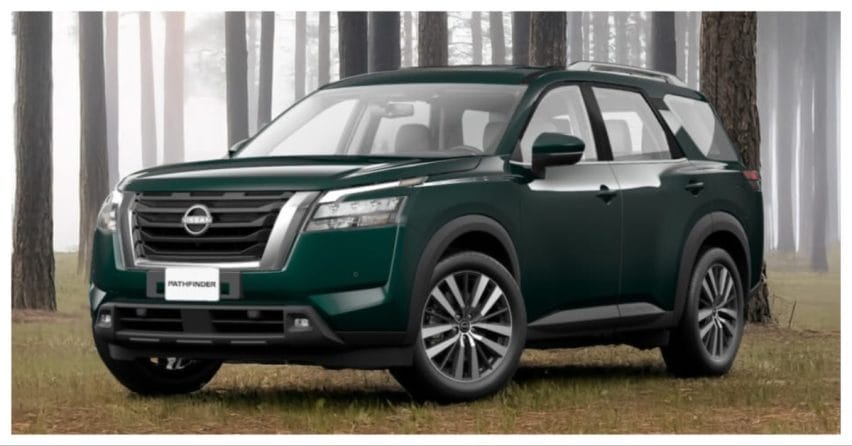
In 2026, when most of the market is making a shift toward smaller turbo engines, the Nissan Pathfinder in Saudi Arabia stays with a 3.5-liter naturally aspirated V6. And that is not by accident, but it appears that the Japanese brand has a purpose behind the strategy. There are many buyers in KSA who still prefer simple, proven engines that handle heat, long highway drives, and heavy family use, quite common scenarios among SUV buyers, without actually getting into turbo complexity. The Pathfinder’s V6 stays true to its origin of durability and predictable ownership and not chasing trends. The real question for Saudi families is frankly not whether turbos are modern; it’s whether this engine will remain reliable, easy to maintain, and strong in resale value five years down the road. We take a look at the market scenarios and what the future holds.
KEY TAKEAWAYS
What are the prices and variants of the Nissan Pathfinder in Saudi Arabia in 2026?
It is available in five variants from SAR 164,999 to SAR 227,999 with 2WD and 4WD configurations.What are the powertrain details of the Pathfinder in 2026?
There is a 3.5L V6 producing 271 hp and 340 Nm, paired with a 9-speed automatic transmission.What Changed in KSA's SUV Engine Market
Until about three years ago, the market was stable, with naturally aspirated engines powering most family SUVs in Saudi Arabia. But in a rapid shift, today in 2026 there is a clear trend visible. The Renault Duster arrived with a 1.3L turbo. Ford Territory offers turbocharged options. Even the MG ZS splits between 1.5L naturally aspirated and turbocharged variants.
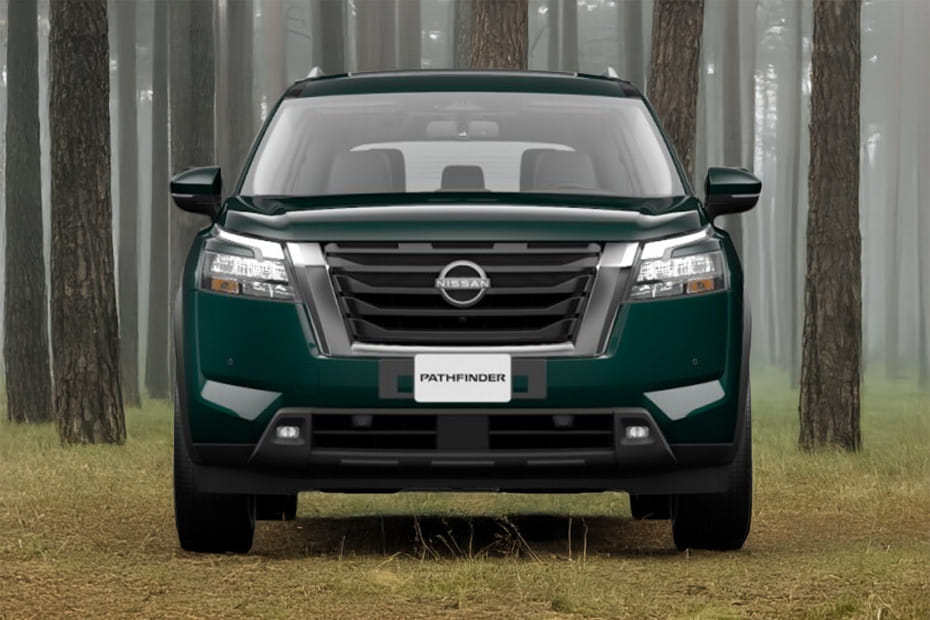
But the Saudi market doesn't follow global patterns. Fuel prices here don’t punish displacement like in Europe or East Asia. The cost of 95-octane fuel, which is often required for turbocharged engines, is higher, and this price difference accumulates over 20,000 kilometers driven each year. Families driving from Riyadh to Dammam care about reliability during long stretches where service stations thin out. Turbocharged engines need specific maintenance intervals. Miss them, and repair costs could be really expensive.
|
Engine Type |
Typical Maintenance Cost |
Heat Management |
Long-Term Reliability Perception |
|
Naturally Aspirated V6 |
Lower (simpler design) |
Better in extreme heat |
Stronger in Saudi market |
|
Turbocharged 4-Cylinder |
Higher (turbo servicing) |
Requires more cooling |
Building reputation slowly |
In the Pathfinder case, the 3.5L V6 certainly promises the expected consumption in everyday real-world Saudi driving, AC running full blast, traffic stops, and occasional sand roads. There is no turbo lag when merging onto King Fahd Road. You don’t have to worry about boost pressure in Taif's mountain passes either.
What Ownership Means
Saudi buyers calculate total cost over six or seven years, not just showroom price. With naturally aspirated engines, the math is simpler:
- No turbocharger replacement at 150,000 kilometers
- No intercooler issues
- Standard oil change intervals without premium synthetic requirements
- Parts widely available from Khobar to Abha
Moreover, on a more practical basis, you will find Nissan dealers stock V6 parts widely. The service centers have extensive knowledge of this engine due to its long-standing use in the fleet. When your family SUV needs repair during Eid travel, you want the part available in Mecca, not shipped from Jeddah.
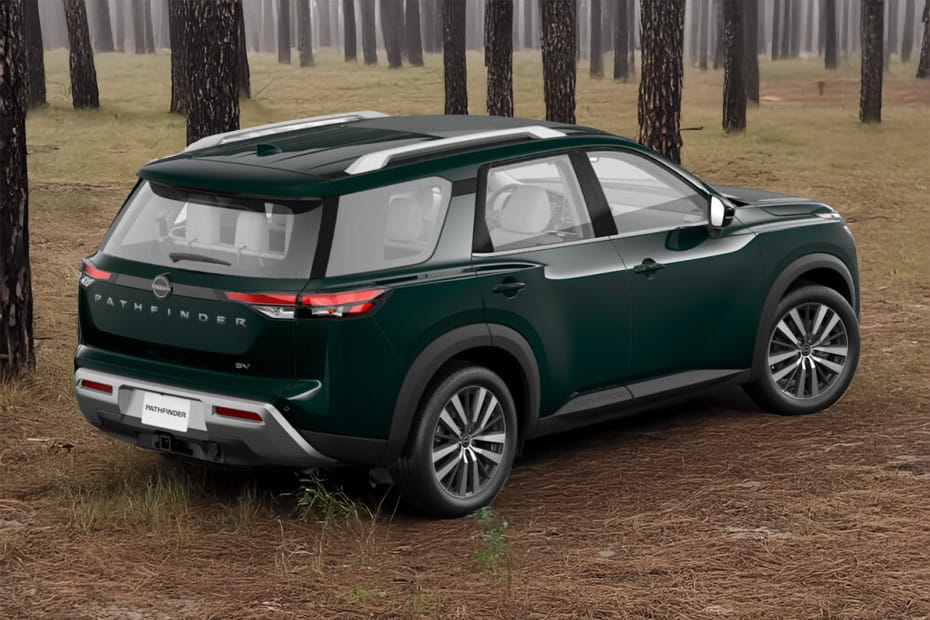
The 271 hp figure sounds modest compared to turbo fours pushing 190+ hp. But the V6's 340 Nm of torque arrives smoothly across the rev range. There is no need to wait for a boost. No sudden power delivery when crossing uneven terrain outside Riyadh. This matters when you have eight passengers and a load of luggage for the Empty Quarter.
Finance Terms
Through murabaha financing at Saudi banks, spreading payments over 60 months:
- Pathfinder S 2WD at SAR 164,999: roughly SAR 2,750 monthly
- SL 4WD at SAR 227,999: roughly SAR 3,800 monthly
But here's what matters more, which you should consider for residual value. Naturally aspirated engines hold value better in Saudi Arabia because buyers trust them. If you list a used Pathfinder with the V6 after five years, you are likely to find buyers promptly. The reputation of the engine precedes it. Turbocharged alternatives are still proving themselves, which translates to steeper depreciation.
Ijara leasing follows the same logic. Leasing companies price risk, and they price turbocharged unknowns higher than proven V6s.
Where Turbos Win and Where They Don't
Turbocharged engines work for certain buyers:
- Light city driving with minimal passenger load
- Snappy acceleration for daily commutes
- Initial punch in traffic
What Buyers in KSA Actually Want
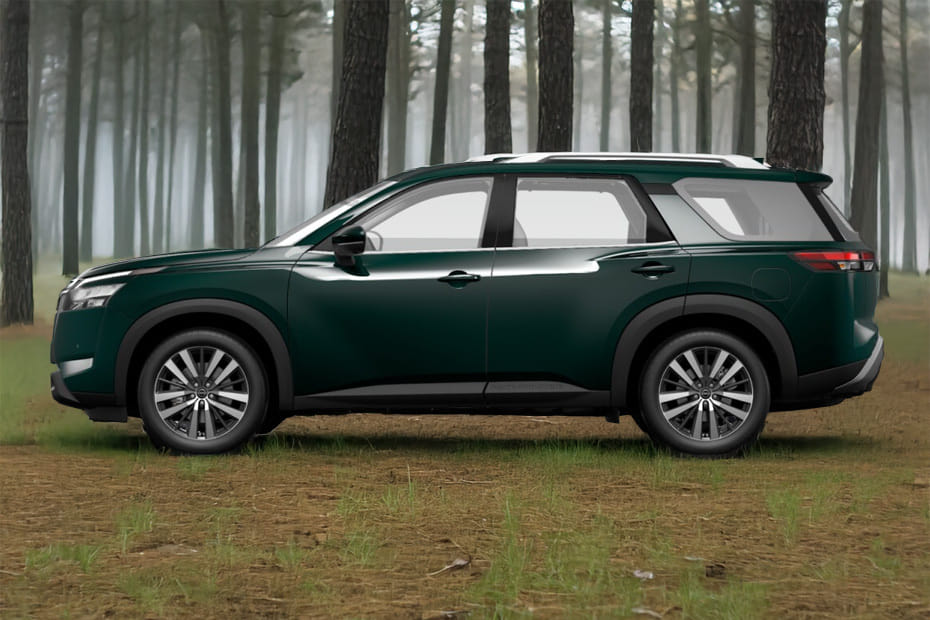
Saudi families focus on space first, reliability second, and features third. The Pathfinder delivers on each of them in exactly that sequence:
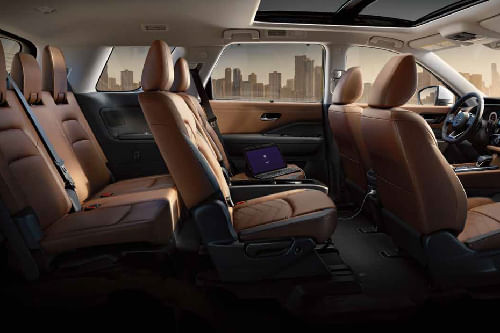
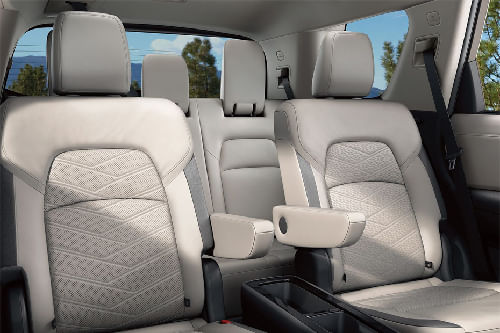
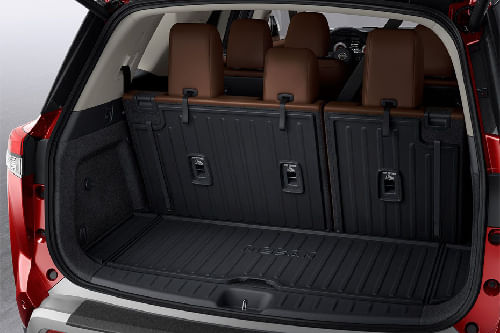
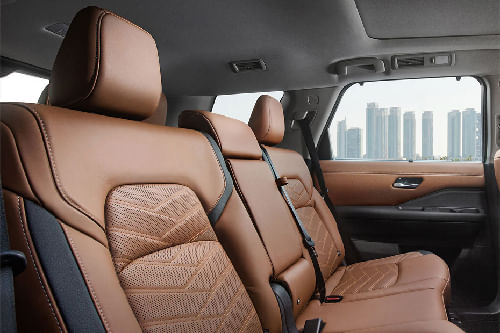
- Three-row configuration seating eight
- EZ FLEX second-row seats that fold even with a child seat installed
- 1,500-kilogram towing capacity for boat trailers or camping gear
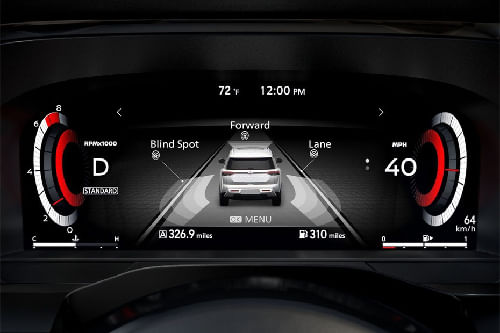
- Nissan Safety Shield 360 standard on SV trims and above
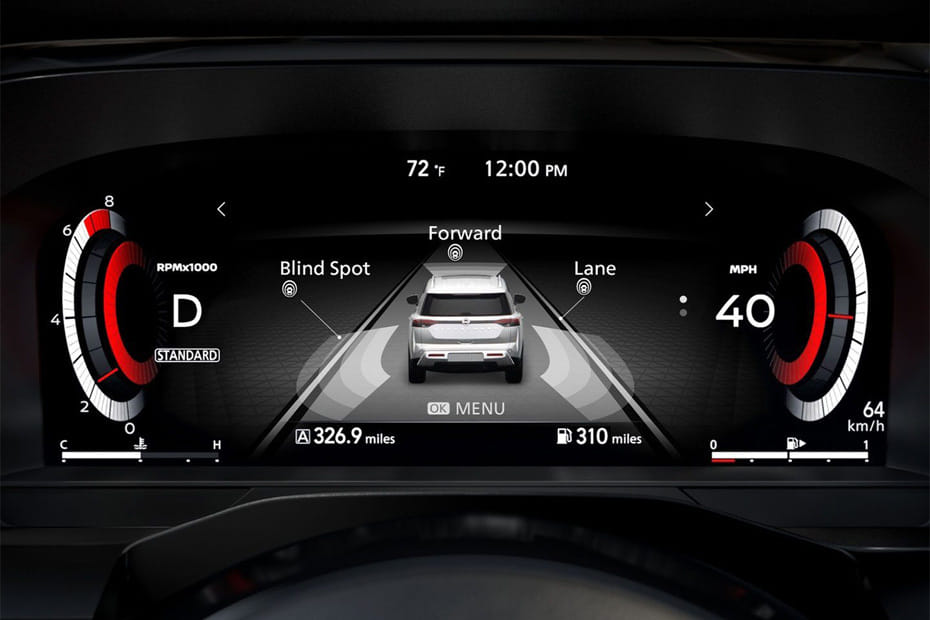
- ProPILOT Assist for the long Riyadh-Dammam route
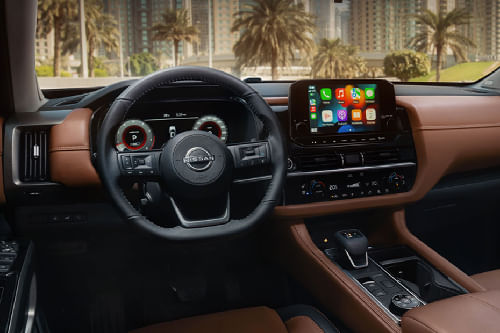
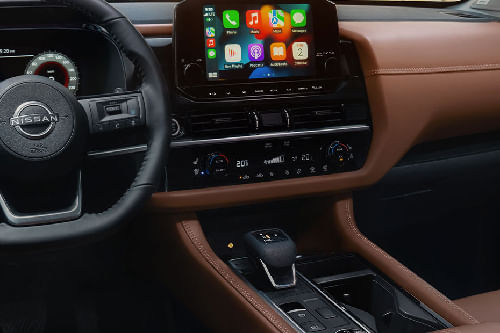
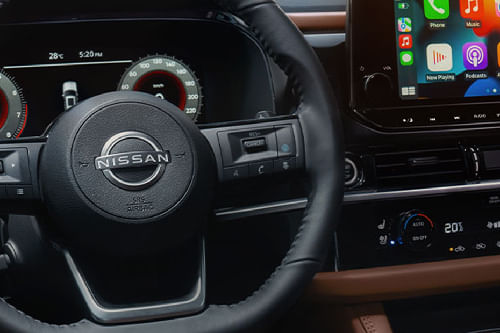
The technology pack comprises a 9-inch touchscreen, wireless Apple CarPlay, and a 12.3-inch digital dashboard on the SL, matching 2026 expectations. But the tech does not dominate the decision; the engine does. And the V6's simplicity reassures buyers who remember turbocharged headaches from European brands a decade ago.
The Desert Test
Most Pathfinder owners take it on a weekend desert trip outside Al-Ahsa. The naturally aspirated V6 maintains steady power even when working harder in soft sand:
- No turbo temperature warnings
- No power cuts to protect forced-induction components
- Consistent delivery at 40 degrees ambient temperature
- No dependency on cool air to make boost
This separates theory from practice. On paper, turbocharged efficiency curves look attractive. In reality, the naturally aspirated engine keeps delivering even when you are stuck in sand with the AC running and the transmission in low gear.
Where the V6 Loses Ground
The Pathfinder targets a specific buyer:
- Typically older with three or four previous vehicles
- Knows what engine repairs cost
- Values predictability over just hype or claims
- Drives 30,000+ kilometers annually between cities
Young buyers shopping for their first SUV gravitate toward turbo fours, which is rather understandable. Smaller displacement sounds modern. But they are most likely not thinking about engine longevity in year eight of ownership.
The engine's fuel consumption does not lead the class. At 30,000 kilometers annually, the difference between 10.5 and 12 km/l means about 475 extra liters yearly, roughly SAR 900 at current 95-octane prices. Not a deal-breaker when weighed against potential turbo repairs.
The Naturally Aspirated Relevance
So now, we come to the relevance of KSA's SUV market in 2026: the naturally aspirated V6 is not actually outdated but rather specialized. With clear advantages, it serves buyers who prefer durability over tech trends, who calculate total cost over monthly payment drama, and who remember that engines need to survive 200,000 kilometers in Saudi heat.
The turbocharged revolution is not wrong either; it is just not universal. Chinese brands pushing turbo fours at aggressive prices are gaining market share in the SAR 80,000-120,000 segment. However, the Pathfinder operates in the SAR 165,000-228,000 range, a market where buyers have experienced fluctuations in trends. They are not necessarily impressed by boost pressure claims but want to know whether the engine starts reliably at Eid when they are driving to Mecca with the extended family.
Nissan's decision to stick with the 3.5L V6 looks conservative until you talk to service managers. They tell you the V6 requires less warranty work; parts suppliers will confirm the V6 components move steadily. Used car dealers will note the V6 Pathfinders sell faster than turbocharged competitors with similar mileage.
The Next Five Years
Will the Pathfinder's naturally aspirated V6 still make sense in 2030? Predicting the future is always tricky or risky for anything, let alone an engine or powertrain. But the answer to that question really depends on regulatory pressure. If Saudi Arabia implements stricter emissions standards favored by smaller displacement forced-induction engines, the V6 faces challenges. But today's regulatory environment doesn't seem to penalize displacement the way Europe does.
But as the automotive sector is now at a technological inflection point, the more immediate and even bigger threat comes from electrification, and hybrid systems combining naturally aspirated engines with electric motors offer the simplicity buyers want with better efficiency. Hybrid strategy of Toyota in Saudi Arabia proves demand exists. If Nissan adds a hybrid Pathfinder variant using the V6, it could extend the engine's relevance another decade.
Also Read: Chery Tiggo 2 Pro in KSA: Features, Pricing Strategy and Target Buyers
Dinesh Goluguri

With over 15 years of experience in the automotive world, Dinesh Goluguri bringing hands-on experience and deep market knowledge. Passionate about SUVs, sports cars and luxury vehicles, he combines enthusiasm with expertise in delivering insights that resonate with car buyers and enthusiasts alike. With a special interest in car modifications and upgrades, Dinesh offers a unique perspective that goes beyond standard reviews, highlighting both factory features and customization potential. His work helps readers navigate new launches, features and trends in the dynamic automotive market.
Read Full Bio-
Explore Nissan Pathfinder
-


-
Nissan X-Trail -
Nissan Patrol -
Nissan Altima -
Nissan Magnite -
Nissan Kicks -
Nissan Patrol Nismo -
Nissan Tekton -
Nissan N7 -
Nissan Frontier Pro -
Nissan Juke EV -
Nissan Micra EV -
Nissan Leaf
- News
- Latest
- Upcoming
- Popular
-
 Nissan Frontier ProPrice coming soon
 -
 Nissan Juke EVPrice coming soon
 -
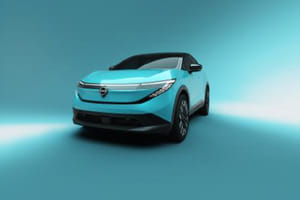 Nissan LeafPrice coming soon
 -
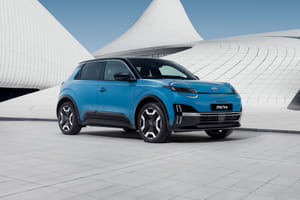 Nissan Micra EVPrice coming soon
 -
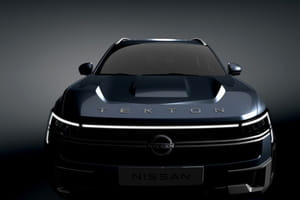 Nissan TektonPrice coming soon
 -
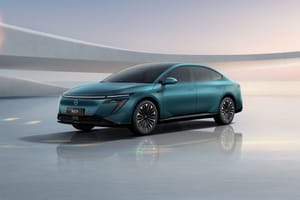 Nissan N7Price coming soon
-
 Nissan X-TrailSAR 104,999 - 156,999
 -
 Nissan PatrolSAR 261,000 - 422,999
 -
 Nissan AltimaSAR 112,700 - 141,500
 -
 Nissan XterraSAR 118,999 - 163,999
 -
 Nissan ZSAR 261,999

-
 Nissan Pathfinder29 Apr, 2026 .
|

|
|

|
|
|
Transmission Type
Automatic
|
Automatic
|
Automatic
|
Automatic
|
Automatic
|
|
Engine Displacement
3498
|
-
|
2398
|
3598
|
5298
|
|
Power
271 Hp
|
165hp@6000rpm
|
267Hp@6000rpm
|
295Hp
|
355Hp
|
|
Torque
340 Nm
|
241Nm@4000rpm
|
430Nm@1700-3600rpm
|
260Nm
|
518Nm
|
|
|
- Latest
- Upcoming
- Popular
-
 Jeep Grand Cherokee 2026Price coming soon
 -
 Toyota CenturyPrice coming soon
 -
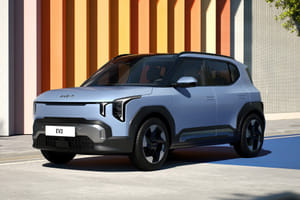 KIA EV2SAR 148,000
 -
 ZEEKR 9XPrice coming soon
 -
 Hyundai Ioniq 9Price coming soon
 -
 Mitsubishi PajeroPrice coming soon



-
 Land Rover Range RoverSAR 591,500 - 1.3 Million
 -
 GMC HUMMER EVSAR 579,200 - 725,500
 -
 Hyundai PalisadeSAR 242,305 - 242,368
 -
 Toyota RaizeSAR 68,827 - 75,497
 -
 Changan UNI-KSAR 141,335
 -
 Hyundai TucsonSAR 103,500 - 162,552