Saudi Talent Rising in Automotive & Mobility Leadership Roles

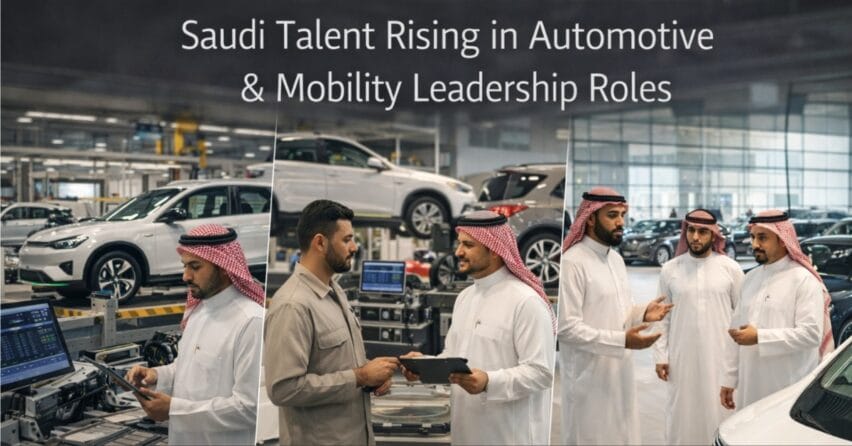
There are clear signs of the vital role the automotive industry plays in the overall economic growth of Saudi Arabia. The needs of personal mobility, fascination for cars and a car culture are some of the key characteristics that define the local industry. In terms of pure numbers, Saudi Arabia ranks as the top market across the GCC and North Africa in annual sales. This gives the industry important status from an economic and job creation perspective. Today, almost all the top brands are present in the country, and many Chinese brands are hiring the local workforce and finding their way to woo the local buyers and also.
KEY TAKEAWAYS
How many Saudis work in automotive leadership roles now?
Over 8,000 Saudis in management positions, up from approximately 2,000 in 2020.Which training programs support Saudi automotive talent?
Abdul Latif Jameel Academy, NAVA Academy, TVTC Programs, and manufacturer-specific training centres.This also means the automotive sector is an enabler of many economic aspects of the country. About five years ago, the Saudi auto market, be it sales, service at the dealership level, or even manufacturing or assembly plants, was largely dominated by foreign workers and executives. But that was five years ago; the situation started to change in a big way. Today, you'll most likely find Saudi nationals running operations, including overseeing supply chains and making strategic decisions about the business. This points towards a major shift, not just cosmetic but a structural one that augurs well for the country and the overall automotive market as we see more and more Global Automakers Expanding Their Leadership Teams in Saudi Arabia. There is a real chance for young Saudis to genuinely rise into leadership roles across the automotive sector.
Saudi Leadership Growth in Automotive (2020-2025)
|
Role Category |
2020 |
2025 |
Growth |
Key Positions |
|
Manufacturing Management |
200 |
1,800 |
800% |
Plant managers, production supervisors |
|
Service Operations |
500 |
2,400 |
380% |
Service managers, workshop supervisors |
|
Sales Leadership |
800 |
2,200 |
175% |
Showroom managers, fleet directors |
|
Supply Chain |
100 |
600 |
500% |
Procurement managers, logistics directors |
|
Engineering & Design |
150 |
800 |
433% |
Engineering managers, R&D leads |
|
Training & Development |
250 |
1,200 |
380% |
Academy directors, curriculum heads |
Data from market sources
From Compliance to Competence
The government’s Vision 2030 initiative is driving the localisation (Saudisation) of the market to achieve the electric vehicles with achieving 30 per cent adoption under the new Saudi Arabia's EV Policy. The Ministry of Human Resources set quotas, and companies had no choice but to comply or face penalties. While the goal of the government policy was to give impetus to job creation and preference to locals. But something changed around 2022-2023, as Saudis filling leadership roles were no longer the function of filling the mandatory quotas, but rather they were vital to the business and started to earn promotions based on their contribution and growing performance.
The Abdul Latif Jameel Academy alone has trained over 5,000 Saudis since its founding. And most of the early graduates successfully acquired necessary training which helped them take entry-level technician positions. This trend has further accelerated as recent graduates are becoming service managers within three years. The difference is visible: better training combined with genuine career pathways.
Lucid Motors is one of the most visible examples of this swift shift in the marketplace. The company relocated 50+ international executives but at the same time hired Saudi nationals for middle management, where they are not just symbolic but actually important ones. Saudi managers play a key role in many critical functions, like overseeing production lines, quality control systems, and supplier relationships.
Real Leaders Making Real Decisions
The major shift took place mostly in service operations that highlight the magnitude of change that has happened. Five years ago, overseas nationals were managers that dominated workshops; this is no longer the case. Today, Saudi service managers oversee teams, handle customer complaints, manage parts inventory, and make warranty decisions. This is largely attributed to their deeper understanding of local customer expectations, better than expatriate managers ever could.
Training Infrastructure That Works
Since the demand is growing, so does the infrastructure, as several institutions are developing automotive talent across the country.
Abdul Latif Jameel Academy: this premier institute offers technical training in automotive maintenance, bodywork, and spare parts management. It has delivered 50,000 training hours annually and continues to increase it to the next level to fulfil the demand.
NAVA Academy: here the focus is on EV technology, high-voltage systems, battery management, and connected vehicle software. One big new area that promises huge future growth as EVs start to make their way into the market.
TVTC: it has partnered with manufacturers to develop customised programmes with nationally recognised certifications. This attempt showcases an approach toward tailor-made talent available to hire.
Manufacturer Training Centres: Most of the brands, like Lucid, Hyundai, and Ceer, send Saudi employees to international facilities for 2–3-month courses to get hands-on experience and real-world experience with global exposure.
Clearly all this infrastructure was not present five years ago. Now it produces hundreds of qualified Saudi managers annually. Things have been changing rapidly, whereas Saudi talent has been making a huge difference by contributing to almost all key operations of auto companies. This infrastructure didn't exist in 2020.
Skills in Demand
It is worth noticing that Saudi nationals are developing essential competencies and not just playing a support role anymore.
Technical expertise: it is quite critical to understand manufacturing processes, quality systems, and EV and hybrid technologies through hands-on training and skills enhancement.
Supply chain knowledge: Here what is required is managing parts procurement, inventory systems, and logistics coordination to boost the overall effectiveness.
Government relations: This is one skill that matters in tasks to help navigate Ministry of Industry requirements and localisation needs, compiling laws and paperwork. Saudi managers understand regulatory environments better than expatriates and can be far more effective.
Cultural intelligence: This is one big factor that is hard to ignore. Since understanding local customer preferences and business relationships makes a huge difference. In fact, it's fair to say that this matters more than technical skills in many contexts.
Team management: another vital factor is leading diverse teams; this includes expatriate specialists and also Saudi junior staff.
What It Means for the Industry
There are many more positive impacts of local talents than one might think on the actual user experience and quality of service to consumers. Saudi leadership easily translates into overall better customer service; when the service managers understand local culture and customers' expectations, it is natural that complaints will be resolved faster. When parts managers are Saudis, they emphasise inventory based on actual market needs rather than generic regional allocations and quickly address the needs without spending a lot of time, boosting the overall speed.
The same is the case with addressing warranty, where decisions are improved. Saudi managers have the authority to approve goodwill repairs without needing to escalate the decision to regional offices in Dubai or Bahrain. That's the difference between three days and three weeks for approval, which makes customers' lives a lot easier in getting the job done.
Product availability definitely changes, as Saudi sales directors can focus on specific models, colours, and trim levels that align with local preferences. They understand that Saudi buyers want particular features, be it rear sunshades, heavy-duty AC, or beige interiors, and quickly push manufacturers to provide them, helping customers faster.
Training quality increases. Saudi training managers develop programmes suited to Saudi technicians and their Arabic language preferences. This accelerated training and also learning is more effective with better results. This naturally helps in producing better-qualified technicians who diagnose and repair vehicles correctly the first time.
Better customer communication: Effective communication matters more to customers. It plays a key role in quality of service and better customer experience. As service advisors trained by Saudi managers explain problems and solutions exactly the way Saudi customers understand, using culturally appropriate communication styles, this is highly effective in helping them with their precise concerns.
The Challenges That Remain
Despite the apparent progress and observable results, there are still obstacles to surmount. There are areas where work is still in progress, and it will take some time to address these challenges. For example: Saudi managers encounter issues with their level of experience compared to expatriates with 15–20 years in the industry. So when it comes to solving some highly critical and complex manufacturing problems, these highly experienced expatriates play a key role. As Saudi teams are still developing and need time to get to that level. The distinction is nothing but a factor of time and experience.
Retention is an issue. One obvious issue is that when a Saudi manager develops skills and a rival company offers better opportunities, he is likely to leave. This creates turnover in critical positions and causes problems across ecosystems.
Language may not sound like a big issue, but it still is, especially when it comes to technical documentation. Most manufacturer manuals and diagnostic software remain in English; this slows knowledge transfer to Saudi teams.
But these are temporary issues that are just a matter of time. With every passing year, Saudi automotive managers are gaining hands-on experience developing stronger operational skill sets and expertise.
Conclusion
Looking beyond the surface, it is obvious that Saudi talent is genuinely growing fast into automotive leadership roles. Management positions across manufacturing, service, sales, and engineering are way more today than back in 2020. This underlines the growth defined by demand for skilled and trained talent. Gradually necessary infrastructure is also coming up to fill the gaps of growing needs. With training infrastructure with many academies and training institutes that produce qualified candidates. This boosts the entire automotive ecosystem with better sales, service, and faster and quicker decisions that serve the local need far better.
Dinesh Goluguri

With over 15 years of experience in the automotive world, Dinesh Goluguri bringing hands-on experience and deep market knowledge. Passionate about SUVs, sports cars and luxury vehicles, he combines enthusiasm with expertise in delivering insights that resonate with car buyers and enthusiasts alike. With a special interest in car modifications and upgrades, Dinesh offers a unique perspective that goes beyond standard reviews, highlighting both factory features and customization potential. His work helps readers navigate new launches, features and trends in the dynamic automotive market.
Read Full Bio-

Nissan X-Trail -

Nissan Patrol -

Nissan Pathfinder -
Nissan Altima -
Nissan Xterra -

Nissan Z -
Nissan N7 -

Nissan Kicks -

Nissan Leaf -

Nissan Magnite -

Nissan Juke EV -
Nissan Micra EV
- News





- Latest
- Upcoming
- Popular
-
 Nissan Frontier ProPrice coming soon
 -
 Nissan Juke EVPrice coming soon
 -
 Nissan LeafPrice coming soon
 -
 Nissan Micra EVPrice coming soon
 -
 Nissan TektonPrice coming soon
 -
 Nissan N7Price coming soon



-
 Nissan X-TrailSAR 104,999 - 156,999
 -
 Nissan PatrolSAR 261,000 - 422,999
 -
 Nissan PathfinderSAR 164,999 - 227,999
 -
 Nissan AltimaSAR 112,700 - 141,500
 -
 Nissan XterraSAR 118,999 - 163,999
 -
 Nissan ZSAR 261,999

-
 Nissan X-Trail29 Apr, 2026 .
 -
 patrol NISMO 2022Crafted To Conquer29 Apr, 2026 .
 -
 Nissan Pathfinder29 Apr, 2026 .
 -
 The new Nissan Altima | Challenging the norm29 Apr, 2026 .
 -
 Nissan Patrol PRO-4X Ride & Drive29 Apr, 2026 .
 -
 New Nissan Z 2023 - Middle East Premiere29 Apr, 2026 .
 -
 All-New Nissan Magnite - 202529 Apr, 2026 .
 -
 The all-new Nissan KICKS | Challenging the norm29 Apr, 2026 .
 -
 Nissan X-Terra - Specifications and Features29 Apr, 2026 .